Thinning
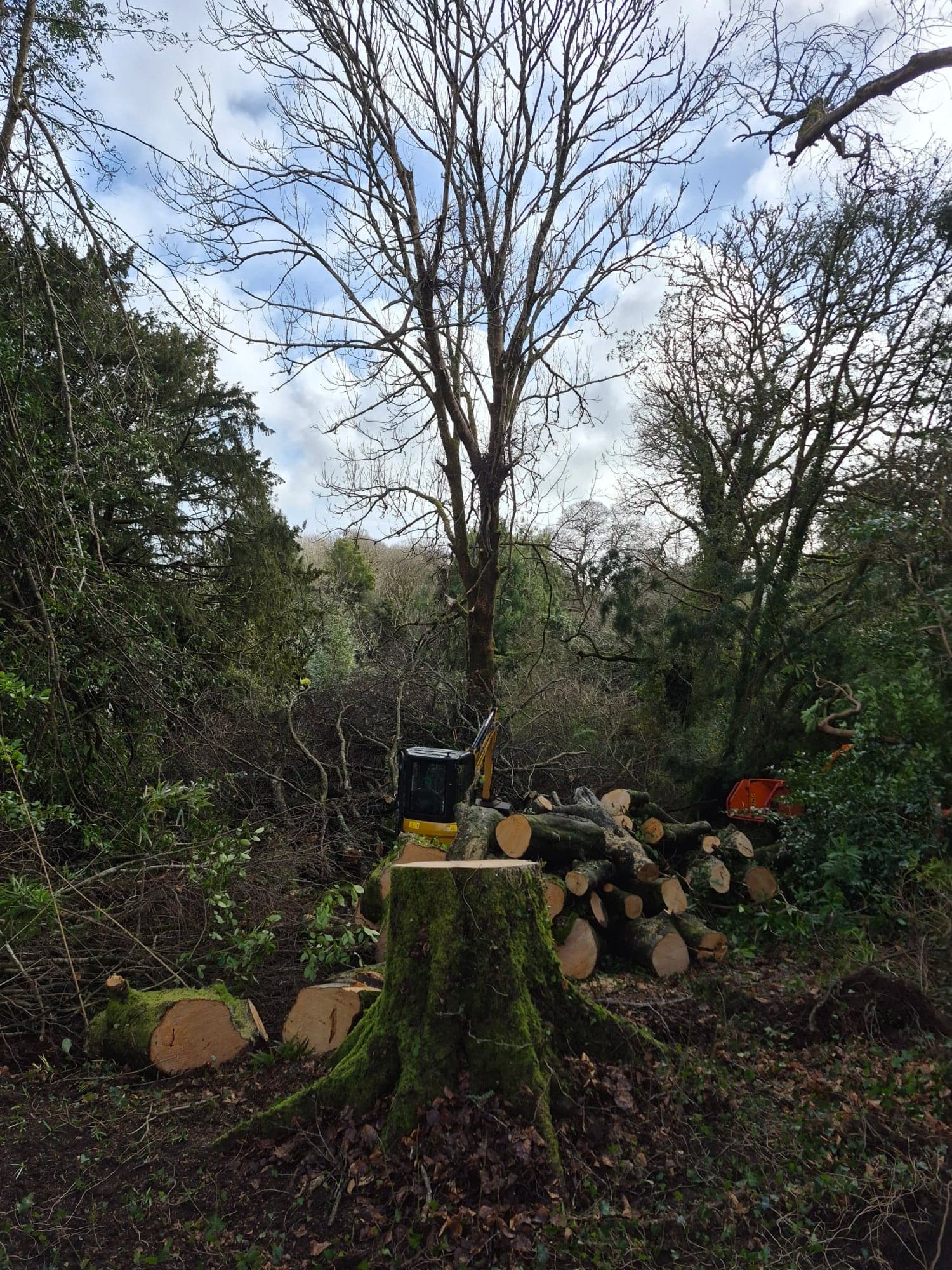
A wood that has not been thinned grows tall, thin stems competing for the same light, and none of them ever becomes a good tree. Thinning takes out the weakest and the crowded ones so the rest have room to develop, opens the canopy enough for a ground flora to return, and produces firewood and sometimes saleable timber along the way. We mark the trees with you, fell them, and extract the timber with the digger and the lorry.
Fallen and dangerous trees in woodland
After the winter storms most woods have windblown trees across rides, hung up in their neighbours or leaning over a boundary. Some can be left where they lie for wildlife. Those over paths, fences and neighbouring land need dealing with, and hung up trees are dangerous to leave. We clear what needs clearing and lift root plates with the digger where a ride has to be reinstated.
Where a tree has to be destroyed rather than moved, we do that too: the fire in the photograph is a magnolia condemned by the Environment Agency in a large woodland we look after, which had to be burnt on site.
Planting and regeneration
Gaps opened by thinning or storm damage can be left to regenerate naturally or planted with a mix suited to the soil and the exposure. In Cornwall that usually means sessile oak, the native Cornish oak, with hazel, holly, rowan and birch, and on the wetter ground alder and willow. We plant with guards where deer and rabbits demand it and can come back to check and beat up the planting in following years.
Rides, edges and habitat
The edges are where a wood is richest. Widening a ride, coppicing a strip of hazel, leaving standing dead wood and building habitat piles from the brash all cost little and make a real difference to the birds, butterflies and small mammals a wood supports. We build those into a thinning job as a matter of course rather than removing every last stick.
Felling in woodland can need a felling licence from the Forestry Commission once the volume in a calendar quarter goes above a small threshold, and we will tell you if your job is likely to need one and help you apply.