
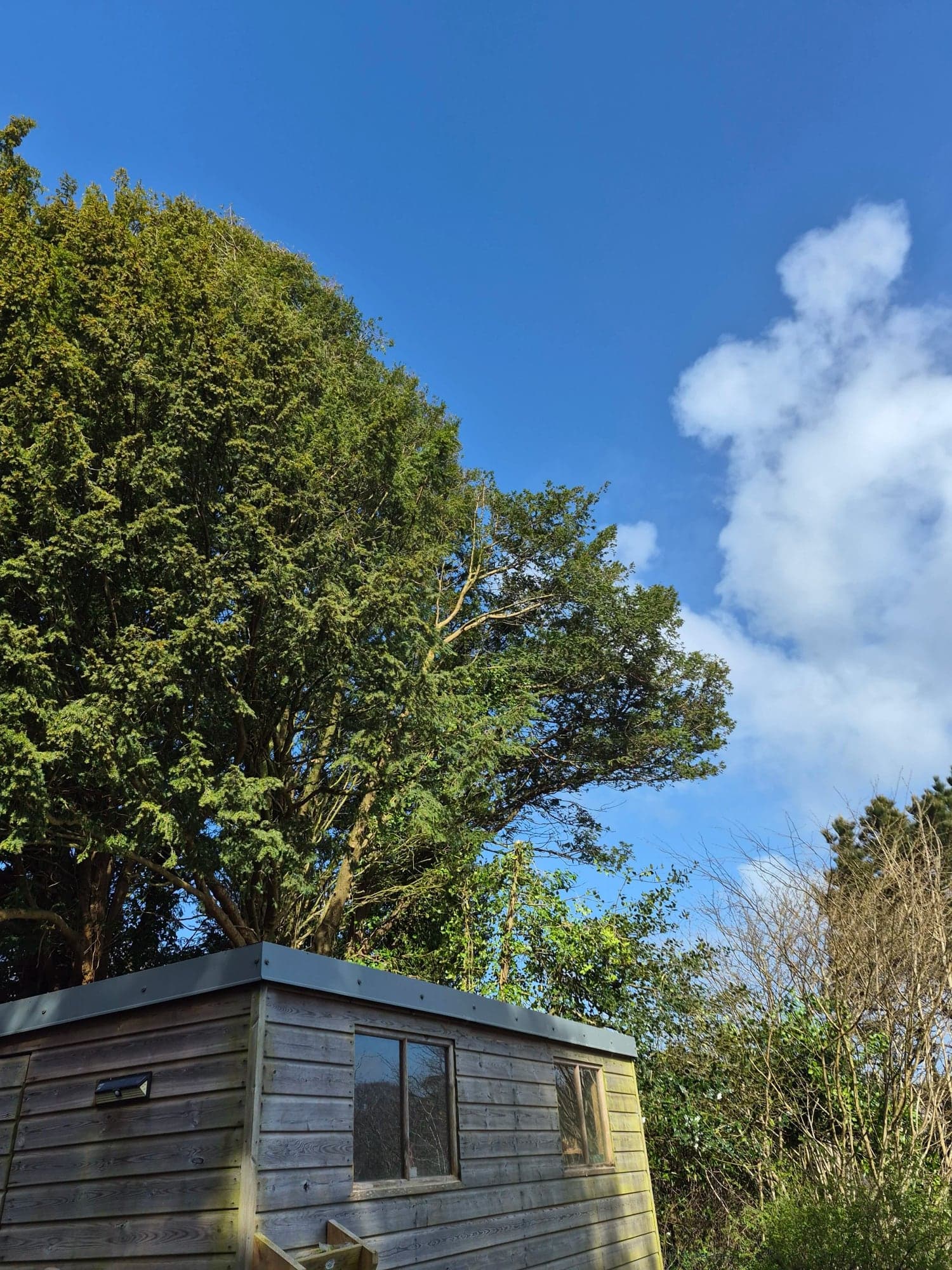
Removal is the last option, not the first
We believe trying to retain a tree should be the primary aim if it is in a suitable position. A reduction is often a better way to lower the risk of a tree causing damage than taking it out, and it keeps the shade, the screening and the wildlife value that took decades to grow. So the first conversation is always about whether the tree can be managed instead.
There are honest reasons a tree does have to go. The species can outgrow its surroundings, with roots at the drains and a crown over the roof. A pathogen such as honey fungus can hollow a tree from within so that no amount of pruning makes it safe. Storm damage can leave a stem split or a root plate lifted. When that is the case, we say so plainly, explain what we would do and quote for it.
Where a tree comes out we would nearly always suggest replanting with a species that suits the spot, so the ecological value is kept. That is a separate, small job, and one we are glad to do.
How we take a tree down
Straight felling from the base is the quickest method and the one we use where there is open ground for the tree to land on: a field, a large lawn, a woodland edge. The tree is cut with a directional notch and back cut, with winches or wedges used to steer it if the lean is against us.
Sectional dismantling is for the trees that most people in Cornwall actually have: close to a house, over a shed, above a road or wall, or hemmed in by a neighbour's garden. A climber works down the tree cutting it into pieces, and each piece is lowered on rigging ropes to a controlled landing point, or lifted straight out by a crane where we can get one in. The crane version is described on its own page, because it changes how long the job takes and what it costs.
Whichever method, the brash is chipped on site and the timber is cut into lengths that our digger and lorry can handle. Most jobs are finished with the site raked and the woodchip either taken away or left for your borders, as you prefer.
Permissions to check first
Before any tree is removed we ask whether it is covered by a Tree Preservation Order or stands in a conservation area, because work to a protected tree without consent is an offence for the owner as well as the contractor. Cornwall Council's planning map shows both, and we can help you check. Where consent or a notice is needed we will tell you what to submit; we do not remove a protected tree without it.
Nesting birds are the other check. Between March and August we look carefully before any dismantle begins, and if there is an active nest the work waits.
What happens to the timber
Sound hardwood is processed for firewood, and if we remove timber from your property we offer a discount on cut and split logs delivered back to you; the details are on the firewood page. Timber affected by a fungal disease is kept out of the firewood pile. Larger stems can sometimes be left for you in lengths if you want them. Woodchip from healthy trees makes good mulch.