
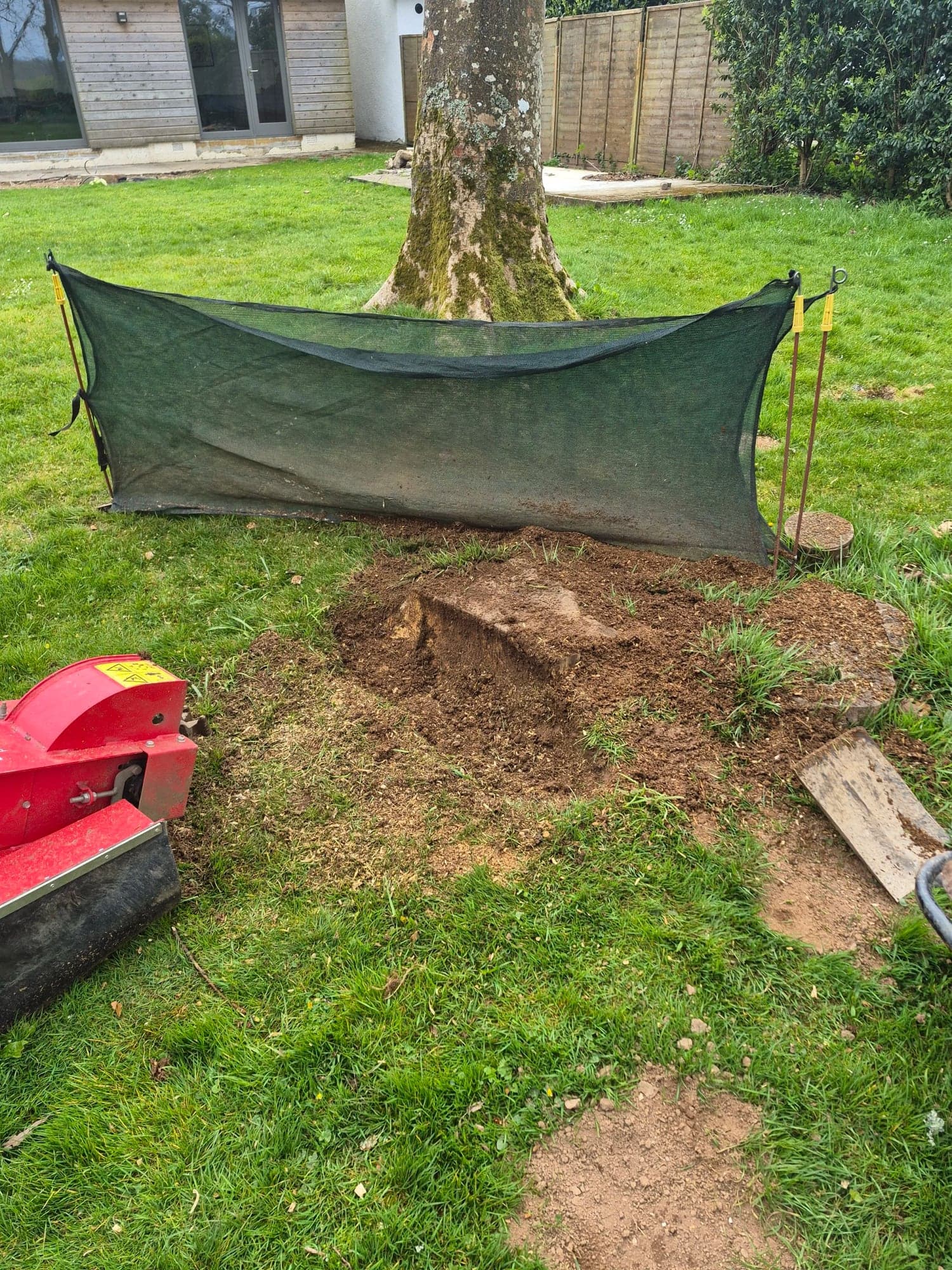
Grinding
A stump grinder is a machine with a toothed wheel that chews the stump into chips, working down until the top of the stump is below ground level. It is the right method in areas where the digger and lorry cannot get, such as a back garden reached only through a side gate, and for smaller stumps anywhere. The grindings and soil are left in the hole, which settles over the following months, or we can take them away and backfill with topsoil ready for turf or planting.
Grinding takes the visible stump and the top of the root plate. The larger roots running out under the lawn stay where they are and rot down over the years, which is fine for a lawn or a border but worth knowing if you are planning to build or lay a drive over the spot.
Lifting the whole stump
If a stump is large and cannot be ground, most often because the tree has blown over and left the root plate standing on end, we use the digger to remove as much soil as possible, lift the entire stump out and load it onto the lorry to be taken off site. It leaves a clean hole with the roots gone, which is what you want if the ground is being landscaped, built on or replanted with something that needs the space.
On a lawn we hold the excavated soil back behind netting or on boards so the grass around the hole can be made good afterwards. The hole is backfilled and levelled before we leave.
When to leave a stump
Not every stump needs to go. Where a tree has been lost to honey fungus the ground will host the fungus for years, and replanting a tree in the same place would almost certainly end the same way; in that case we often suggest leaving a low stump rather than paying to dig it out. A stump in a wild corner can be left as habitat for beetles and fungi and cost you nothing. We will say which we think applies.