
Ivy on trees and buildings
Ivy is not the villain it is sometimes made out to be, and on a healthy tree in a wild corner it is good habitat. It becomes a problem when it hides the stem of a tree we need to inspect, adds weight and sail to a tree that is already struggling, or gets into the mortar and gutters of a building. We cut it at the base and strip it back to where you want it, and where the tree is to be kept we leave the stem visible so the next health check can actually see it.
Hedges, banks and overgrown boundaries
Cornish hedges are stone and earth banks with trees and shrubs growing along the top, and they need a different touch from a suburban privet. We cut hedgerow trees, lay or coppice hazel and thorn where it suits, and bring overgrown boundaries back to a manageable line without wrecking the bank underneath. Tall or wide hedges beyond a domestic hedge trimmer, leylandii screens that have got away, and hedges along lanes where the traffic has to be managed are all normal work.
Hedges and scrub are nesting habitat, so the main cutting season is autumn to late winter. In the nesting season we only cut where it is genuinely necessary, and only after checking.
Field, paddock and site clearance
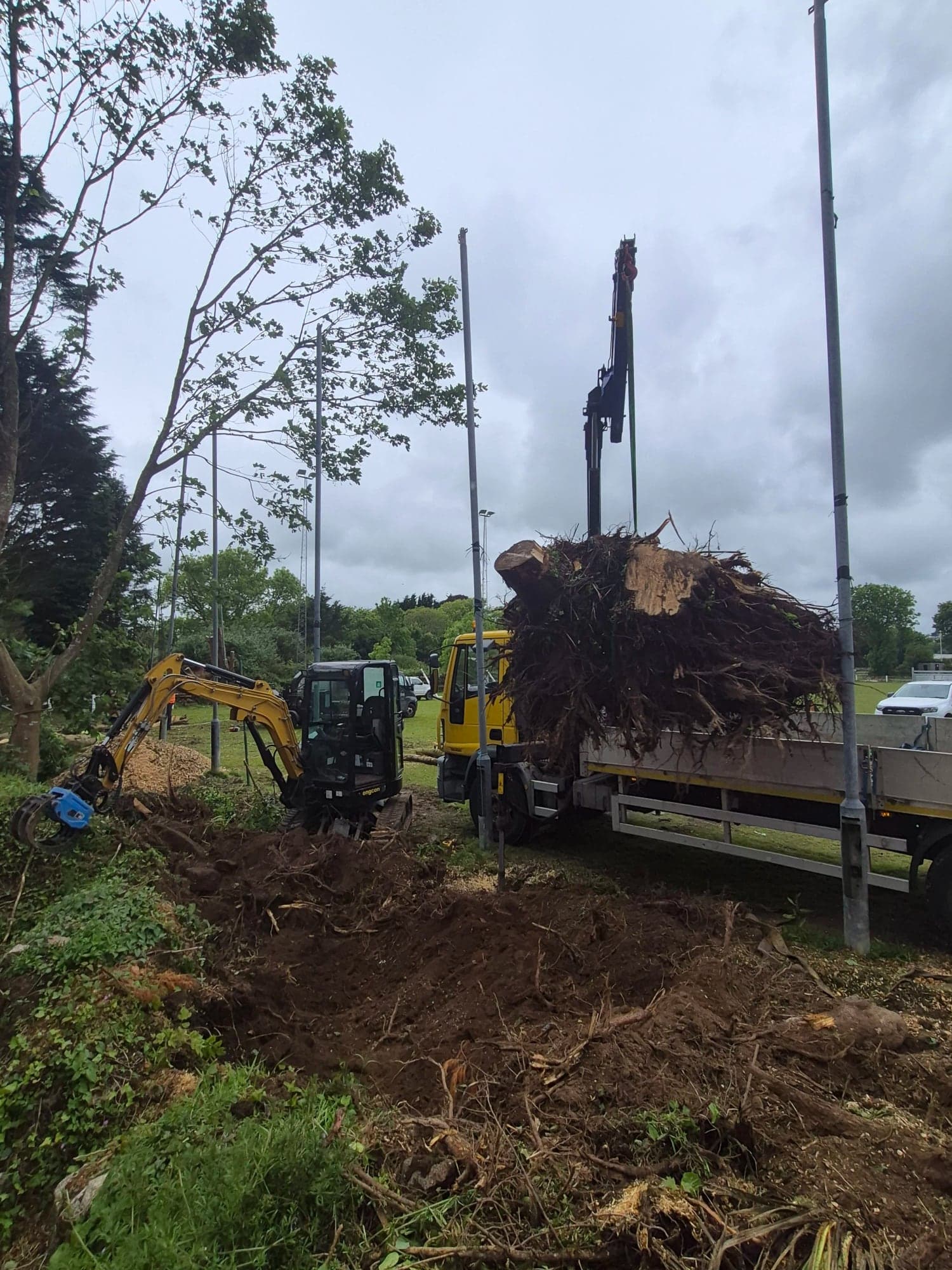
Bramble, gorse, bracken and self sown scrub cleared with brushcutters, a flail or the digger depending on the scale, with the arisings chipped, burnt or taken away. Sites for building work, neglected paddocks, overgrown orchards and land being brought back into use. On larger clearances our lorry and digger make the difference between a job that takes days and one that takes a week.
Working with ecologists
If we ever need an extra expert opinion we call in ecologists, who can look through the vegetation as we work and stop us if anything of interest is found. Where a site is likely to hold protected species, dormice in old hazel coppice, reptiles in gorse and bracken, badgers in a bank, that check happens before the machines do, not after.