
Reduction: the least intrusive option
A crown reduction prunes back the outer two metres or less of a tree's branches. Done well, it is the least intrusive form of tree management, and the result should still look like the same tree with a slightly smaller crown. We work to British Standard 3998:2010, Tree work. Recommendations, keeping cuts small and made back to a suitable growth point rather than leaving stubs.
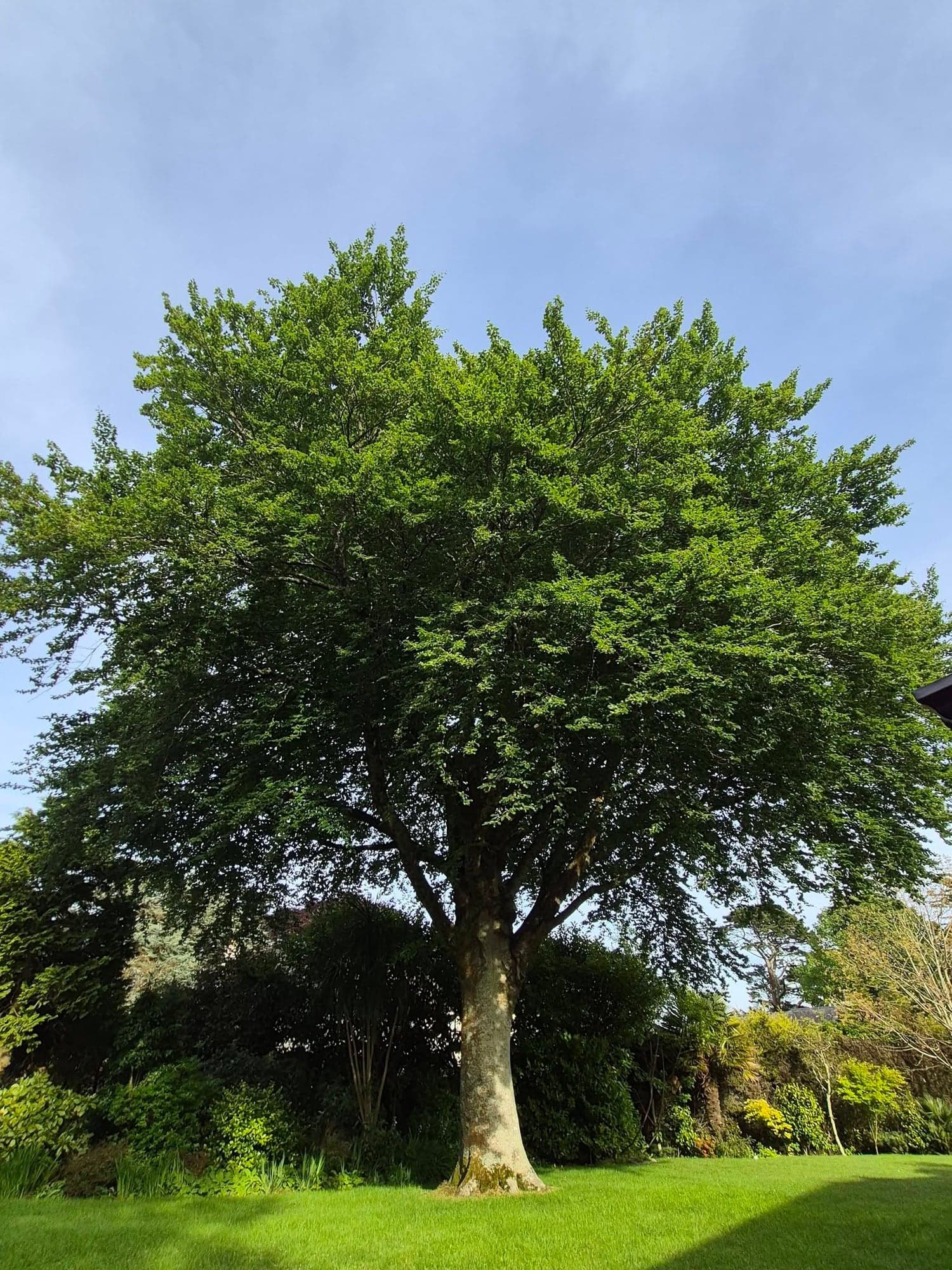
A recent example is a middle aged European beech in Kenwyn, Truro, whose canopy spread was getting out of proportion for its setting. We carried out a selective 2 m reduction with every cut under 75 mm, and a crown lift at the same time to put more light on the grass below. The photographs on this page show it before and after.
Thinning, dead wooding and crown lifting
Some trees grow a thick interior canopy full of crossing branches. That adds sail area for the wind to push against and holds damp that invites infection. Thinning removes those small diameter branches from within the crown, and it makes a surprising difference to how the tree looks and how it copes with a gale.
Dead wooding is a risk management technique. Removing the dead branches reduces the weight in the canopy and takes away the branches most likely to fall on a still day. It is a sensible piece of routine care for any large tree over a garden, a drive or a footpath.
Crown lifting raises the height of the lowest branches. It is light work, and it is the answer if you are trying to mow under a tree, get a vehicle past it or let light into a room the low branches have been shading.
Pollarding and coppicing
Pollarding is a hard prune, cutting the tree back to a framework of main stems, and it is the right method for trees that need to be much smaller but not removed. For the first few years it looks severe. Once the new growth comes the tree settles into a shape that can then be maintained on a cycle of a few years. Most species we pollard recover well, and it is what saved two storm blown sessile oaks last winter: pollarded while they lay on their sides, winched upright, and now in leaf again.
Coppicing is the older cousin of pollarding, cutting a small tree such as hazel to the ground so it regrows from the stool. It is a traditional way of managing hedgerows and woodland edges and can be repeated every few years as needed.
Formative pruning and veteran trees
Pruning a tree regularly from a young age is the cheapest way to manage its future size and shape, and it avoids the big cuts later on. If you have planted trees in the last few years, a formative prune every couple of winters is worth far more than a reduction in twenty.
At the other end of a tree's life, veteran trees need a different approach: retrenchment pruning and staged reductions that mimic how an old tree naturally shrinks, natural fracture pruning that leaves the kind of ends wildlife uses, bracing where a limb needs support, and root protection and mulching to keep the ground it depends on healthy. We take these trees slowly and on purpose.