
Monterey pines, holm oaks and the Fox family's legacy
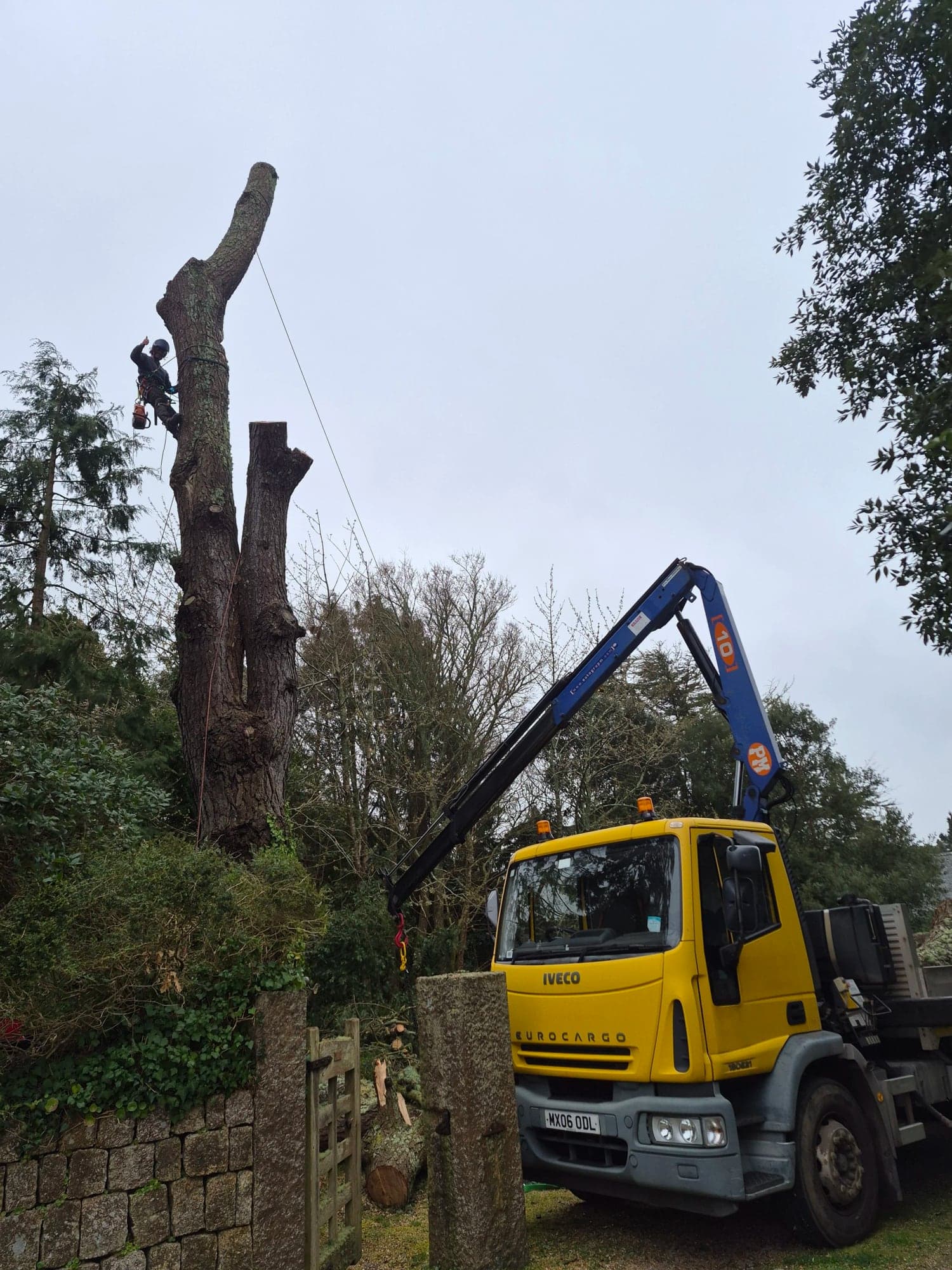
Falmouth is mild, sheltered from the north and open to the south west, and the Fox family and the other Victorian shipping dynasties used that to plant gardens of trees from the other side of the world. Monterey pines and Monterey cypresses from California, holm oaks from the Mediterranean, cordylines, tree ferns, magnolias and eucalyptus all thrive here, and the ones planted around Fox Rosehill, Kimberley Park, Gyllyngdune and the big houses on the Melvill Road and Boslowick side are now well over a century old. They are magnificent and they are a maintenance problem, because a Monterey pine forty metres tall over a hotel car park drops limbs the size of ordinary trees.
Holm oak, Quercus ilex, is the other signature tree. Its timber is so hard it will blunt a saw after a few passes, and its dense evergreen crown catches every gale. The removal on our Facebook page of a holm oak lost to honey fungus was in Penzance, but the same disease, the same weight and the same tight gardens turn up all over Falmouth.
Wind, salt and the trees that cope
Falmouth faces the sea on two sides, and the south westerlies come up Falmouth Bay with nothing to stop them. Trees on the Pendennis side, along Castle Drive, Swanpool and towards Maenporth are shaped by it, leaning inland with the windward side burnt by salt. That exposure decides what can be planted and what will keep standing. The evergreen oaks, pines and sycamores that the Victorians chose are still the right answer for the seaward gardens, and a beech or a birch planted in the teeth of it will struggle. The sheltered valleys behind, up Penwerris and the Budock side, grow almost anything.
Terraces, steep plots and no way in
The town is built on hillsides, and the older housing along Killigrew Street, Trelawney Road and the streets above the harbour has tiny, steep, terraced gardens reached through the house or down a flight of steps. A big tree in one of those cannot be felled and often cannot be dragged out, so it is cut into pieces small enough to carry and taken out the way we came in. It is slow, careful work and it is what we started out doing here.
On the other side of the town, at Boslowick, Goldenbank and the newer estates towards Falmouth Docks and Penryn, there are drives to work from and the crane and lorry come into their own. The university's expansion at Penryn Campus and Tremough has also brought a great deal of student housing, and landlords with trees they have not looked at for years are a regular call.
Conservation areas and the council
Central Falmouth, the Packet Quays, Arwenack and much of the Victorian seafront are conservation areas, and the big exotics in the public parks and the grander gardens are frequently protected. As in Truro, we check Cornwall Council's map before quoting and put in the application or the notice where one is needed. Falmouth Town Council also owns and cares about a great many trees, and work near the parks is worth a conversation with them first.
What we do most in Falmouth
Reductions and dead wooding of the big exotics, crane assisted removals where a tree has outgrown a hotel or a converted villa, storm damage clearance after every big blow, and stump removal on plots being redeveloped. The free tree health check is a sensible first step for anyone who has bought one of the older houses and inherited a garden of trees they know nothing about.