
The old town on the ridge
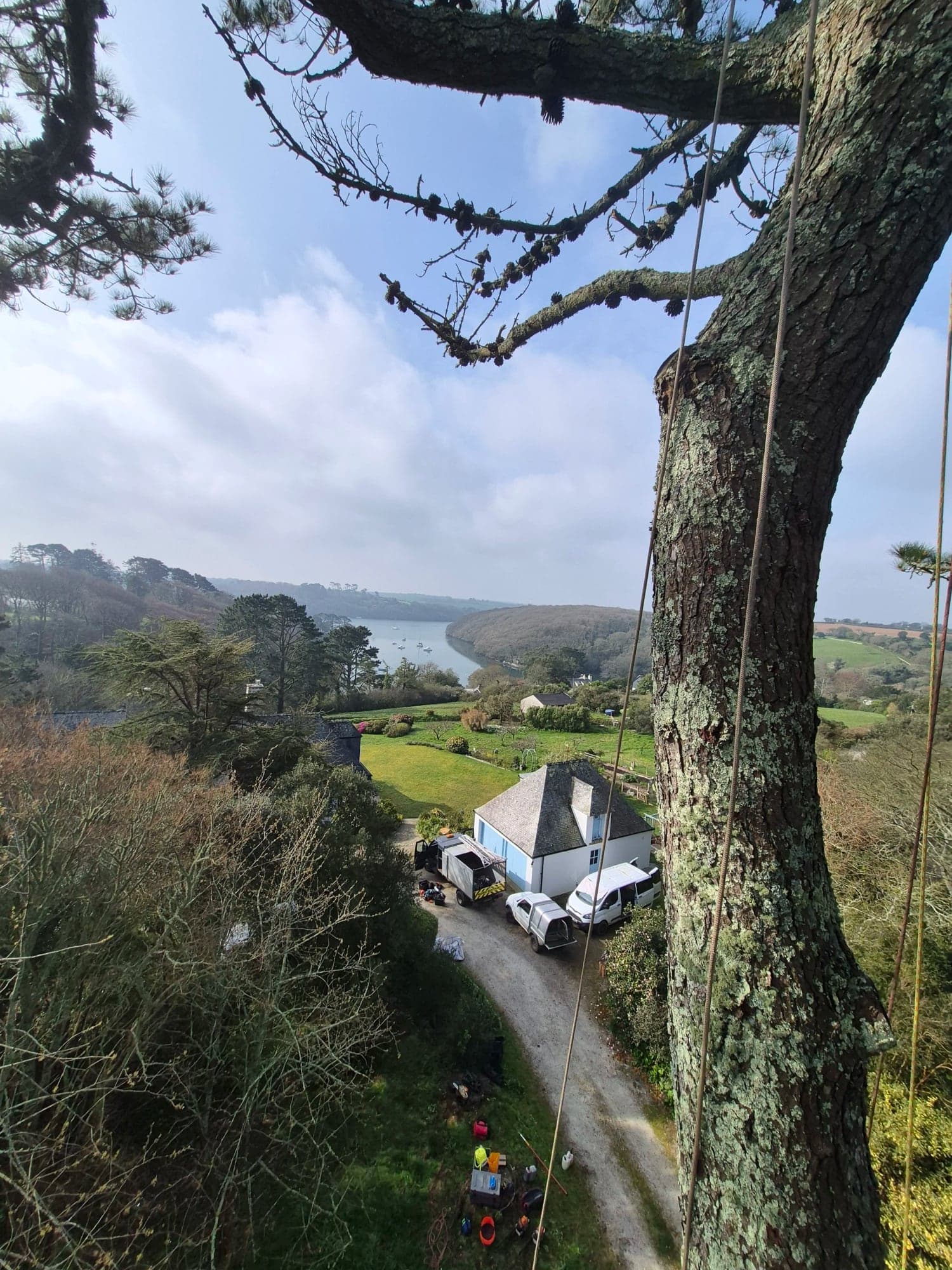
Penryn is older than Falmouth and looks it. The medieval street plan runs along the ridge above the creek, and the houses on Broad Street, St Thomas Street and the opes running down either side have long, narrow gardens dropping away behind them, many of them terraced in granite and reached only through the house. Trees in those gardens were planted small and are now large: sycamores, ashes, a good many bay and holly, and the odd Victorian conifer that somebody planted for a Christmas tree in 1890. Taking one out means sectional dismantling with nothing landing on the terraces below, and carrying everything out through a front door on a street with a parking problem.
The town centre and the streets around it are a conservation area, and a number of the older trees are protected, so we check Cornwall Council's map before quoting and make the application where one is needed.
The campus and the student streets
Penryn Campus at Tremough, shared by Exeter and Falmouth universities, has changed the town. The campus itself sits in the grounds of a former convent with mature parkland trees, and the housing that serves it, from the new blocks at Glasney to the older terraces let to students, has brought a great many landlords with gardens they rarely see. A lot of our Penryn work is landlord work: a tree that has got out of hand over a shared drive, a conifer hedge that has taken the light from the ground floor flats, a dead tree in a back garden nobody had noticed. The free tree health check is a cheap way for a landlord to find out what they own.
Ash dieback and the creek side woods
The Penryn River below the town is lined with woodland, from the old quays at Jubilee Wharf and the boatyards down to the water treatment works and across to Flushing. Much of it is ash, and ash dieback has hit these woods hard. Dead and dying ash over the creek path, the sailing club and the boatyards is now a regular call, and dead ash is brittle and dangerous to climb, so it is often a crane or a mobile elevated platform job rather than a climbing one. On the far side of the water, the National Trust and the private estates around Trelissick and the Roseland have the same problem on a larger scale.
Mabe, Ponsanooth and the quarry country
Above Penryn the ground rises to Mabe Burnthouse, Longdowns and the granite quarries, and the villages out along the A393 towards Ponsanooth and Perranarworthal are where a lot of our smallholding and woodland work is. Thin soils over granite, wind off Carnmenellis, and belts of Monterey pine and beech planted as shelter a century ago and now falling over one at a time. The College Reservoir and Argal woods, the valley down to Perranarworthal and the old mine workings around Kennall Vale are full of trees that have grown untended for decades. Thinning, clearing windblown trees off tracks and taking down the dangerous ones near the lanes is steady winter work.
Getting to you
Penryn is ten minutes from the yard and we drive through it most days on the way to Falmouth, so quoting visits are easy to fit in. The lorry and the crane can reach anywhere on the main roads; the old town needs a plan for parking, and we make one before the day.